Over 60 percent of procurement errors in hospitals stem from misidentifying critical tools like surgical and beauty instruments. This confusion affects american hospitals as much as any others, often leading to costly delays or compromised care quality. For medical professionals and procurement managers, recognizing these distinctions is essential for patient safety, regulatory compliance, and efficient resource allocation. By clarifying the unique features and purposes of each instrument type, informed decisions become far more achievable in busy clinical settings.
Table of Contents
- Defining Surgical And Beauty Instruments
- Categories And Core Features Compared
- Manufacturing Standards And Sterilization
- Regulatory Compliance And Global Laws
- Risks, Costs, And Procurement Considerations
Key Takeaways
| Point | Details |
|---|---|
| Surgical Instruments Purpose | Designed for precise medical interventions, requiring sterilization and durability. |
| Beauty Instruments Focus | Aim to improve aesthetics through non-invasive treatments, prioritizing patient comfort. |
| Regulatory Standards | Surgical instruments face stringent compliance regulations, while beauty instruments have variable requirements based on technology. |
| Procurement Considerations | Evaluate total lifecycle costs and technological reliability for both surgical and beauty instruments to ensure patient safety and fiscal responsibility. |
Defining Surgical And Beauty Instruments
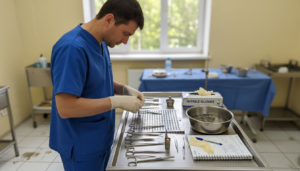
Surgical and beauty instruments represent specialized tools designed for distinct medical and aesthetic purposes. While both categories involve precision instruments, their applications, design specifications, and operational contexts differ significantly. Surgical instruments are hand-held tools used by clinicians to perform medical interventions, ranging from basic scalpels and forceps to complex specialized equipment like bone saws and microsurgical tools.
Beauty instruments, by contrast, focus on aesthetic improvements and non-invasive treatments. Modern beauty instruments include laser, ultrasonic, photon, and radio frequency technologies engineered to address specific skin and cosmetic concerns. These tools prioritize patient comfort, minimal tissue disruption, and targeted aesthetic outcomes.
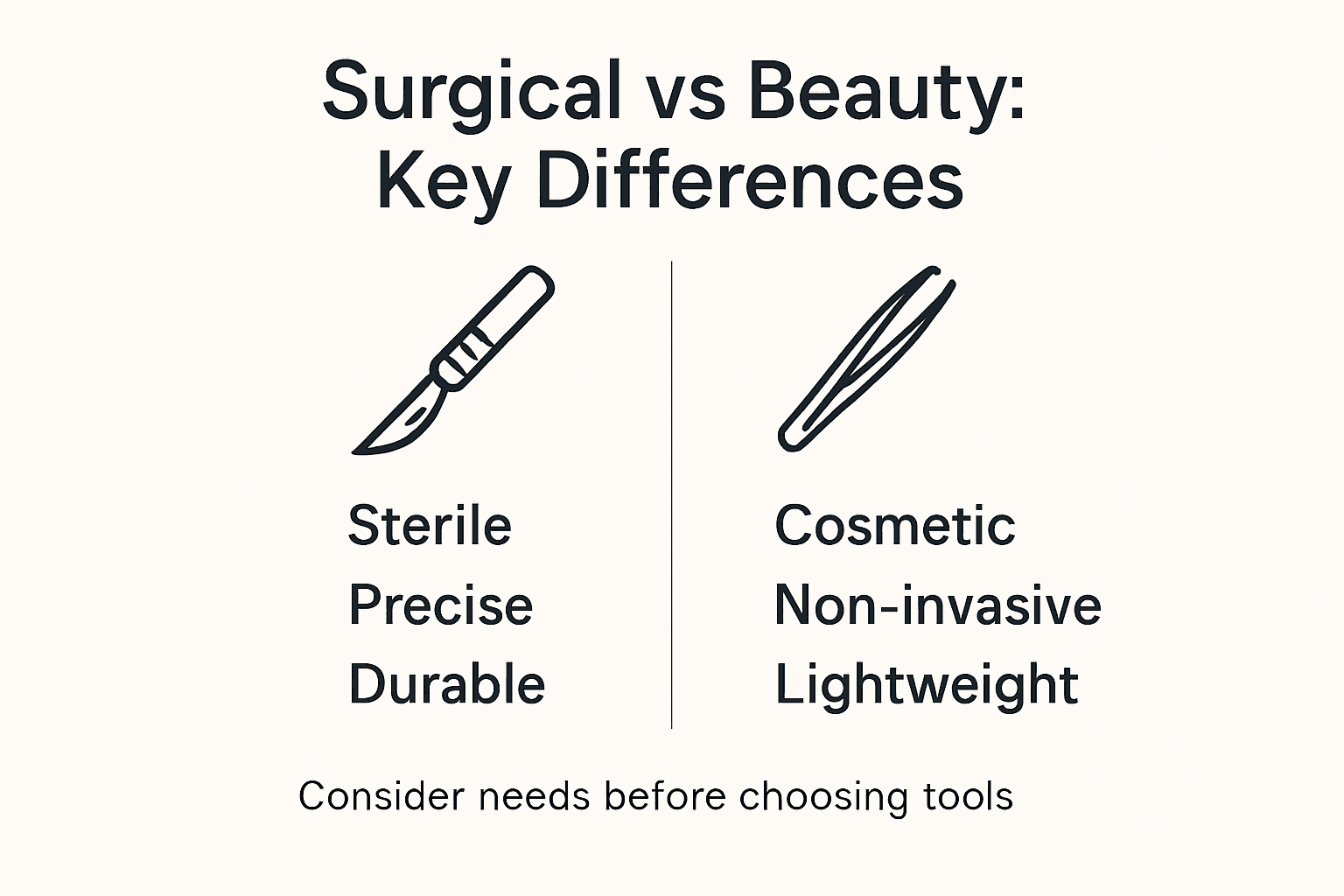
The key distinctions between surgical and beauty instruments lie in their fundamental purpose and technical design. Surgical instruments are engineered for precise medical interventions, requiring sterilization, durability, and acute functionality during complex procedures. Beauty instruments, conversely, are designed for surface-level treatments, emphasizing patient experience, minimal invasiveness, and aesthetic transformation.
Pro tip: When selecting medical or beauty instruments, always prioritize quality, sterilization standards, and specific procedural requirements to ensure optimal performance and patient safety.
Categories And Core Features Compared
Surgical and beauty instruments represent two distinct technological domains with unique categorical characteristics. These specialized tools are differentiated by their fundamental design principles, material composition, precision requirements, and operational contexts. Surgical instruments are engineered for direct medical interventions, emphasizing functionality, sterilization, and precise mechanical performance.
The core feature categories can be systematically compared across several critical dimensions:
Surgical Instrument Categories:
- Cutting tools (scalpels, scissors)
- Grasping instruments (forceps, clamps)
- Retracting devices
- Probing and exploring tools
- Measuring and surgical specialty instruments
Beauty Instrument Categories:
- Laser treatment devices
- Ultrasonic skin technologies
- Radio frequency equipment
- Photon therapy tools
- Microdermabrasion instruments
Material composition further distinguishes these instrument types. Surgical instruments typically utilize high-grade stainless steel, titanium, or specialized medical alloys designed for maximum durability, corrosion resistance, and repeated sterilization. Beauty instruments often incorporate advanced polymers, ceramic components, and precision electronic systems tailored for specific aesthetic treatments.
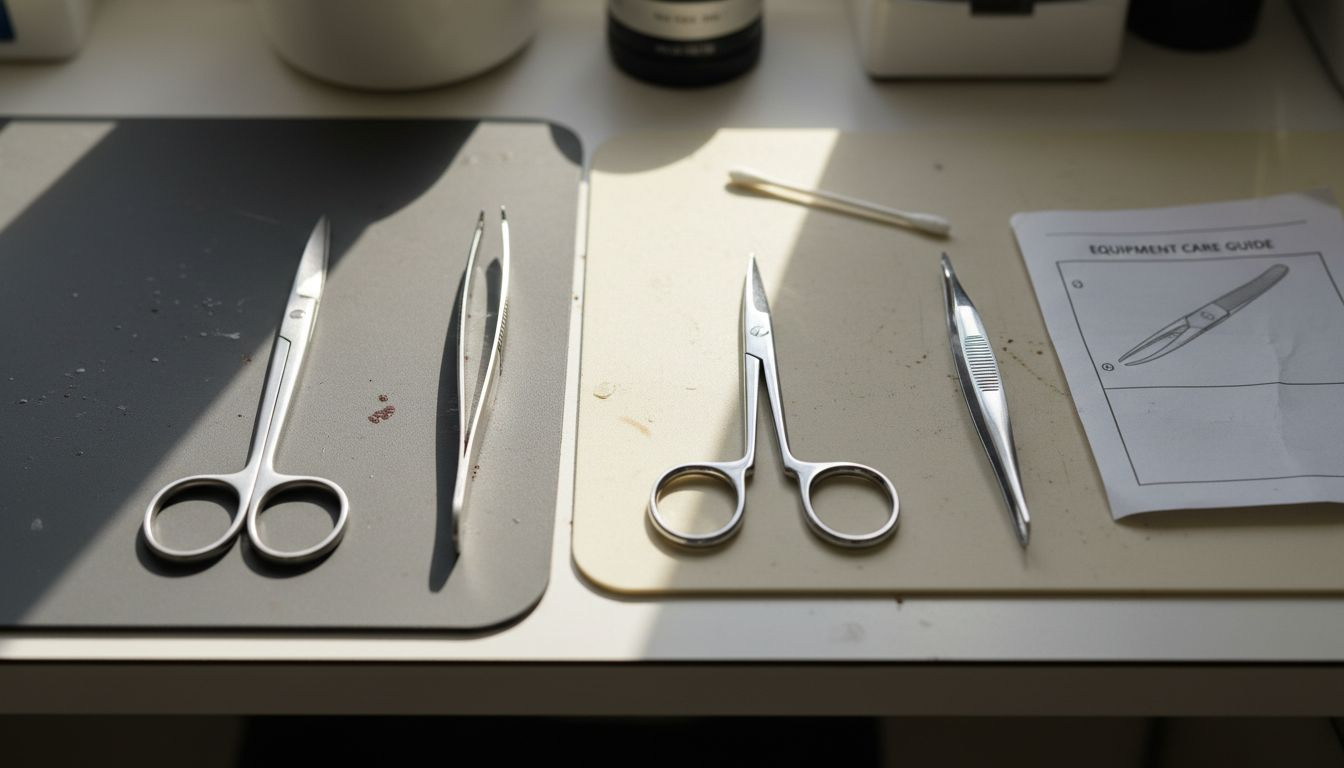
The performance metrics for these instruments diverge significantly. Surgical tools are evaluated by criteria like precision cutting ability, structural integrity, weight balance, and resistance to mechanical stress. Beauty instruments prioritize patient comfort, minimal invasiveness, consistent energy delivery, and targeted treatment efficacy.
Pro tip: When comparing surgical and beauty instruments, always assess the specific technological specifications, material quality, and intended procedural requirements to ensure optimal performance and patient safety.
Here’s a comparison of how surgical and beauty instruments differ across critical dimensions:
| Dimension | Surgical Instruments | Beauty Instruments |
|---|---|---|
| Application Context | Clinical and hospital surgeries | Spas, salons, dermatology clinics |
| Operational Risk | High due to invasiveness | Lower, mainly surface treatments |
| Key Safety Focus | Sterility and infection prevention | Skin irritation and thermal safety |
| Regulatory Oversight | FDA, CE, ISO, rigorous audits | Varies; less stringent, device-dependent |
| Typical Lifespan | 5-15 years with proper upkeep | 2-7 years, technology updates |
Manufacturing Standards And Sterilization
Manufacturing standards for surgical and beauty instruments represent critical frameworks ensuring patient safety, performance reliability, and technological precision. International standards like ISO 17664 provide comprehensive guidelines for processing medical devices, establishing rigorous protocols for cleaning, disinfection, and sterilization across different instrument categories.
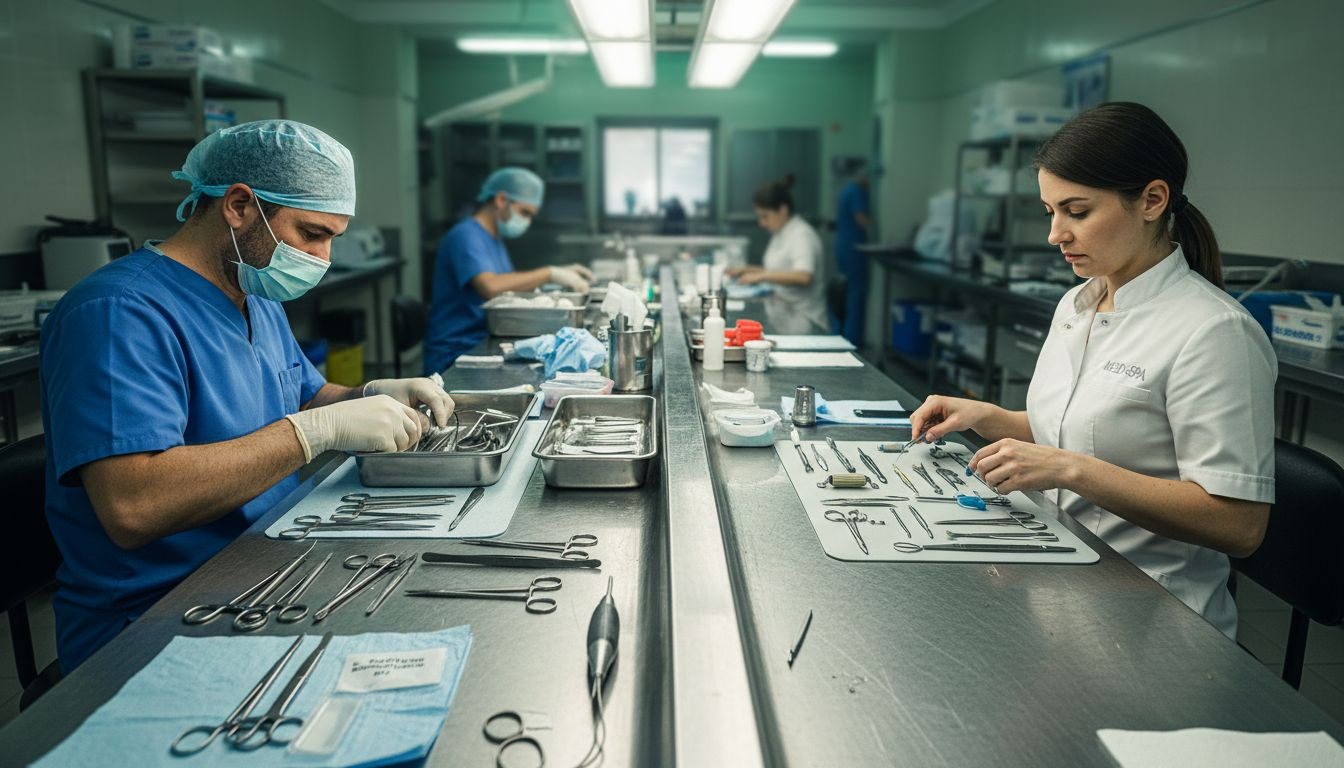
The sterilization requirements dramatically differ between surgical and beauty instruments. Surgical instruments demand absolute sterility, requiring multi-stage decontamination processes that eliminate all microbial life forms. These processes typically involve:
- High-temperature steam sterilization
- Chemical sterilant treatments
- Rigorous cleaning protocols
- Validation and documentation of sterilization cycles
- Periodic quality control testing
Beauty instruments, while still requiring thorough sanitization, often employ less intensive sterilization methods. These technologies focus on surface-level disinfection, using:
- Alcohol-based sanitizers
- UV light sterilization
- Low-temperature hydrogen peroxide systems
- Specialized antimicrobial treatments
Manufacturing quality control becomes paramount in differentiating these instrument types. Surgical instruments undergo extreme precision manufacturing, with tolerances measured in microscopic increments. Each instrument must withstand repeated sterilization cycles without compromising structural integrity or functional performance. Beauty instruments, conversely, prioritize technological sophistication and treatment precision over mechanical durability.
Pro tip: Always verify the specific sterilization protocols recommended by manufacturers and maintain meticulous documentation of instrument processing to ensure optimal safety and performance.
Regulatory Compliance And Global Laws
Regulatory compliance represents a complex landscape for surgical and beauty instruments, with intricate legal frameworks governing their design, manufacturing, and distribution. In the European Union, beauty tools face nuanced classification determining their regulatory requirements, creating a sophisticated regulatory environment that distinguishes between medical devices and cosmetic products.
Surgical instruments are subject to the most stringent global regulations, typically requiring:
- FDA Approval in the United States
- CE Marking in European markets
- Comprehensive clinical testing documentation
- Rigorous quality management system certifications
- Detailed traceability of manufacturing processes
- Continuous post-market surveillance protocols
Beauty instruments navigate a more variable regulatory landscape, with compliance requirements depending on their specific technological capabilities:
- Invasiveness level of the treatment
- Potential medical intervention capabilities
- Energy transmission technologies employed
- Intended treatment outcomes
- Risk classification of the specific device
International regulatory bodies like the FDA, European Medicines Agency, and International Organization for Standardization play critical roles in establishing comprehensive guidelines. These organizations create frameworks that ensure patient safety, technological reliability, and consistent performance standards across different geographical regions.
Pro tip: Always consult local regulatory experts and maintain updated documentation to navigate the complex international compliance requirements for medical and beauty instruments.
Risks, Costs, And Procurement Considerations
Reusable surgical instruments present complex economic considerations, balancing initial acquisition costs against long-term maintenance and sterilization expenses. Procurement teams must navigate a multifaceted decision-making process that extends far beyond simple price comparisons, incorporating patient safety, technological reliability, and organizational sustainability requirements.
Key cost considerations for surgical and beauty instruments include:
Surgical Instrument Procurement Factors:
- Initial purchase price
- Sterilization infrastructure costs
- Maintenance and replacement expenses
- Durability and expected lifecycle
- Compliance certification requirements
Beauty Instrument Procurement Factors:
- Technology sophistication
- Treatment precision
- Energy efficiency
- Maintenance complexity
- Software and calibration expenses
Effective procurement strategies require collaborative decision-making among clinicians, technicians, and financial managers to balance safety, performance, and economic constraints. This holistic approach ensures that instrument selection meets clinical requirements while maintaining fiscal responsibility.
Risk assessment becomes paramount in procurement decisions. Surgical instruments carry higher potential liability, demanding rigorous quality control and comprehensive performance documentation. Beauty instruments, while less invasive, still require careful evaluation of technological reliability, patient safety protocols, and potential long-term treatment outcomes.
Pro tip: Develop a comprehensive procurement framework that includes total lifecycle cost analysis, clinical performance metrics, and ongoing maintenance requirements to make informed instrument investment decisions.
This table summarizes major procurement challenges for surgical vs. beauty instruments:
| Procurement Challenge | Surgical Instruments | Beauty Instruments |
|---|---|---|
| Upfront Cost | High for advanced tools | Moderate, depends on tech |
| Maintenance Requirements | Frequent, specialized expertise | Occasional, technical support |
| Documentation Needed | Extensive performance records | Usage logs, calibration certs |
| Risk of Liability | Elevated, malpractice concerns | Moderate, consumer complaints |
| Staff Training | Intensive clinical protocols | Device operation workshops |
Equip Your Practice With Precision Instruments Tailored to Your Needs
Choosing between surgical and beauty instruments requires thoughtful consideration of safety, functionality, and compliance as detailed in the article. Whether you face challenges in sourcing durable surgical scissors, reliable forceps, or innovative beauty tools, understanding the critical distinctions is just the first step. Key pain points such as sterility standards, material quality, and regulatory compliance must be addressed to ensure the best patient outcomes and operational efficiency.
At RobSana.com, we specialize in providing professional-grade instruments that meet stringent medical and aesthetic standards. Our extensive selection covers surgical scissors, razor blades, tweezers, travel kits, and more—all engineered for durability and precision. By offering quality assured products with international shipping, we support your procurement process with competitive pricing and reliable delivery from our offices in Hungary and Italy.
Explore our comprehensive range of surgical instruments optimized for clinical environments and beauty care tools designed for safe, effective aesthetic treatments.

Make the smart procurement choice today and equip your clinic or salon with instruments designed to excel in safety and performance. Visit RobSana.com now to browse our catalog and secure the best tools for your professional success.
Frequently Asked Questions
What are the key differences between surgical and beauty instruments?
Surgical instruments are designed for medical interventions, emphasizing precision, sterility, and durability, while beauty instruments focus on aesthetic improvements, prioritizing patient comfort and non-invasiveness.
How are surgical instruments sterilized compared to beauty instruments?
Surgical instruments require absolute sterility, involving high-temperature steam sterilization and rigorous cleaning protocols. Beauty instruments use less intensive sanitization methods, such as alcohol-based sanitizers or UV light sterilization.
What materials are typically used in surgical and beauty instruments?
Surgical instruments are often made from high-grade stainless steel or titanium, ensuring durability and corrosion resistance. Beauty instruments utilize advanced polymers, ceramic components, and precision electronic systems tailored for specific aesthetic treatments.
What regulatory standards apply to surgical and beauty instruments?
Surgical instruments are subject to stringent regulations, requiring FDA approval and CE marking, while beauty instruments face more variable compliance requirements based on their technological capabilities and intended use.
Recommended
- ENUCLEATION FINE OPERATING SCISSORS – RobSana
- OPERATING SCISSORS MAYO-STILLE – RobSana
- OPERATING INCISION SCISSORS – RobSana
- DISSECTING FINE OPERATING SCISSORS – RobSana